Should You Buy A Fixer In Silver Lake Or Hold Out For Turnkey?
July 23, 2026
July 23, 2026
If you have been eyeing Silver Lake, you have probably asked yourself a very local question: should you stretch for a fixer with character, or pay more for a home that is ready now? In this neighborhood, that choice is not just about taste. It is about competition, construction risk, timing, and how much uncertainty you can realistically handle. This guide will help you weigh the trade-offs, spot the biggest red flags, and decide which path fits your goals in Silver Lake. Let’s dive in.
Silver Lake is a very competitive market. As of May 2026, Redfin reported a median sale price of $1,416,524 and median days on market of 34. That means desirable homes can still move quickly, whether they need work or not.
The housing stock also makes Silver Lake different from many other Los Angeles neighborhoods. City planning materials describe a large historic residential area with homes developed mainly from 1925 to 1970, including Period Revival, Minimal Traditional, and Mid-Century Modern styles. In practical terms, you are often choosing between older homes with strong architectural identity and updated homes where someone else has already done the work.
A fixer can give you something turnkey homes usually cannot: control. If you care about layout, materials, function, and preserving original character, buying a home that needs work may let you shape the result around how you actually live.
That can matter in Silver Lake because architectural character tends to be part of the appeal. Based on the area’s historic fabric, renovations often make the most sense when they improve livability while respecting the home’s design, rather than covering everything with generic finishes. In a neighborhood with many altered and renovated properties, quality and restraint can matter just as much as the budget.
A fixer may make sense for you if:
A turnkey home usually offers more predictability. You can focus on inspections, disclosures, and normal transaction due diligence without planning for months of design, permits, and construction right after closing.
That matters even more in a competitive market like Silver Lake. If your priority is moving in faster, limiting disruption, and keeping your costs more knowable, turnkey often wins. You may pay more upfront, but you can avoid the hidden stress that comes with a project home.
A turnkey home may make sense for you if:
In Silver Lake, the biggest dividing line is not fixer versus turnkey in the abstract. It is whether the home needs mostly cosmetic work, or whether the project crosses into grading, drainage, foundation, or slope-related work.
That distinction matters because hillside projects can become much more complex. Los Angeles applies special hillside rules to qualifying parcels, and City Planning advises buyers to verify whether a property is in a Hillside Area by checking the parcel in ZIMAS. You do not want to assume every Silver Lake lot follows the same rules.
If a project involves slope repairs, landslide repairs, retaining walls, basement excavation in hillside areas, pool excavation in hillside areas, or similar earthwork, LADBS requires grading plan checks before permits are issued. LADBS also states that soils or geology reports are usually required before permits are issued for this kind of work. Once your remodel touches those issues, your timeline, team, and costs can change quickly.
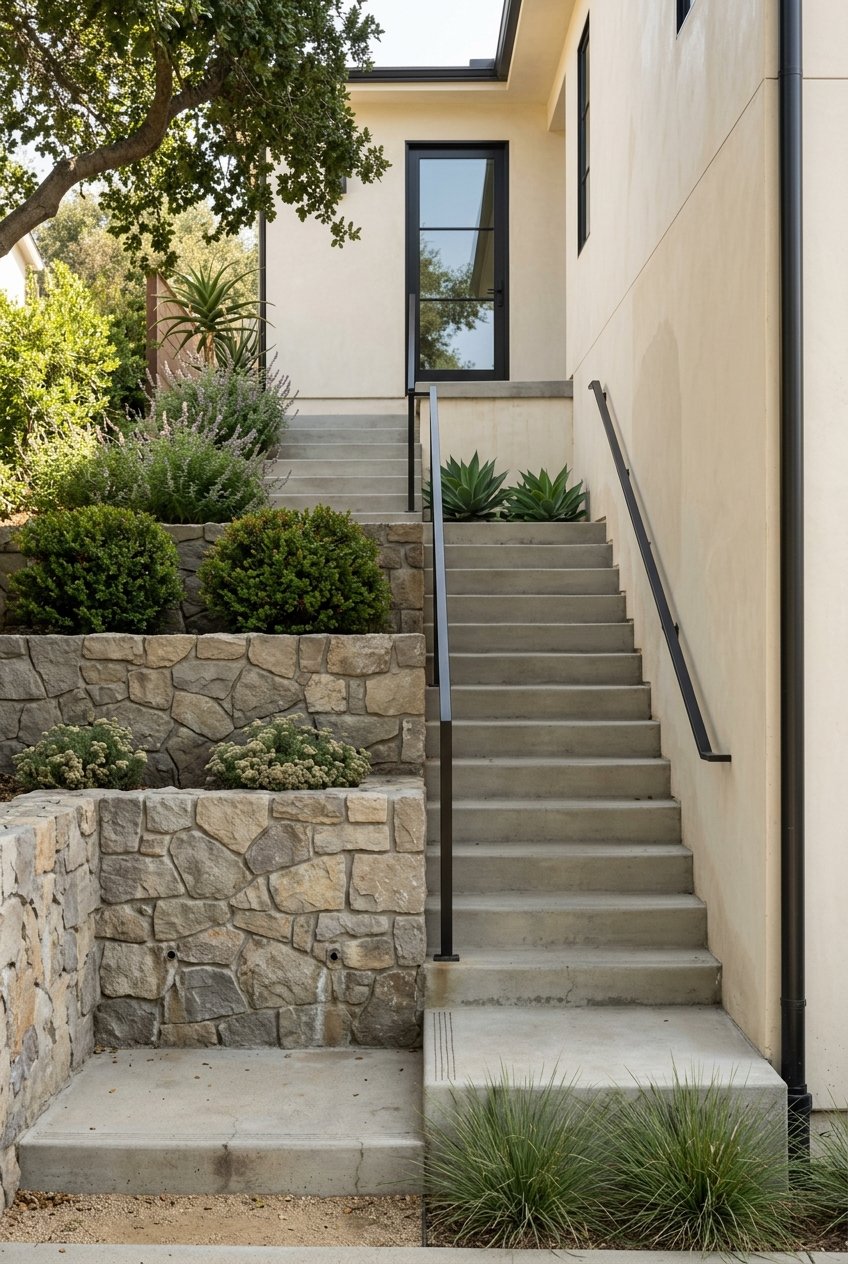
Silver Lake’s terrain is a real factor. City reports describe curving hillside streets, sloped parcels, and public staircases. That can make access, parking, deliveries, and staging harder during construction.
LADBS also notes that grading-related work often involves retaining walls, subdrains, compacted fill soils, irrigation systems, basements, and hillside excavations. These are not small add-ons. They often bring in a larger consultant team and more layers of review.
In plain language, a home that looks like a simple remodel from the street can become a much bigger project once drainage, retaining walls, or foundation conditions come into play. That is why a Silver Lake fixer can be a strong opportunity for the right buyer, but a frustrating one for a buyer who expected a quick cosmetic update.
If you are seriously considering a fixer, due diligence needs to go beyond paint colors and floor plans. California DRE advises buyers to include home-inspection contingencies and notes that inspections should evaluate key systems such as electrical, plumbing, HVAC, roof, foundation, structural components, septic, and solar where applicable. DRE also recommends considering a termite or pest inspection.
The seller’s Transfer Disclosure Statement is important, but DRE makes clear that it is not a substitute for your own investigation. In Silver Lake, you should pay especially close attention to anything that hints at water intrusion, settlement, drainage issues, or unpermitted additions.
Here is a practical pre-offer checklist for a Silver Lake fixer:
California’s natural-hazard disclosure framework can also come into play. DRE notes that sellers must disclose certain hazard-zone information, and the state also cautions that maps are estimates rather than final answers. If a property raises site-specific concerns, professional review may still be needed.
This is one of the biggest risk points with older homes. Cosmetic updates can look polished while hiding work that was never properly permitted.
That matters because LADBS notes that retaining walls or other structures built without permits can lead to Orders to Comply and future inspections. In other words, the problem may not surface until after you own the home. A buyer should ask for records and not rely only on appearance.
If you buy a fixer, your team matters almost as much as the property. In California, CSLB says anyone performing work that requires a building permit, uses employee labor, or totals $1,000 or more in labor and materials must be licensed.
CSLB also recommends checking the contractor’s license status, asking to see the pocket license and ID, and confirming insurance and workers’ compensation. For home improvement contracts, CSLB states that down payments are capped at the lesser of 10% of the contract price or $1,000.
For a multi-trade remodel, CSLB notes that a B General Building contractor is typically appropriate when work combines trades like plumbing, electrical, and carpentry under one contract. In Silver Lake, hillside or structural projects may also require a structural engineer and, when grading or slope issues are involved, a geotechnical engineer or engineering geologist.
One of the easiest mistakes buyers make is underestimating time. A fixer in Silver Lake may not only take longer to build, but longer to define before work even starts.
LADBS states that grading plan checks may be required before permits are issued for certain hillside-related projects. The department also notes that grading work can include retaining walls, excavation, basements, pools, and fill placement. That means the pre-construction period can stretch longer than many buyers expect, especially when the site is steep or access is limited.
If you need certainty, that timeline risk alone may push you toward turnkey. If you have patience and a clear buffer in both budget and schedule, it may be manageable.
If the home has good bones and the needed work is mostly cosmetic, a fixer may be worth serious consideration. That is especially true if you value design, want to create long-term upside, and have enough reserves to handle normal surprises.
If the scope starts drifting toward grading, drainage, retaining walls, slope stabilization, or major foundation work, pause and evaluate very carefully. Those projects are not automatically bad, but they are a very different commitment.
Here is the simplest way to think about it:
| If you value... | You may lean toward... |
|---|---|
| Customization and long-term upside | Fixer |
| Faster move-in and fewer unknowns | Turnkey |
| Design control | Fixer |
| Cost predictability | Turnkey |
| Patience for permits and consultants | Fixer |
| Lower day-to-day disruption | Turnkey |
For many Silver Lake buyers, the answer comes down to your tolerance for uncertainty. A fixer can be a smart play when the location is strong, the architecture has integrity, and the project stays within a scope you can realistically manage. A turnkey home is often the better fit when you want confidence, speed, and a more straightforward path to enjoying the neighborhood.
The key is not chasing the idea of upside in the abstract. It is understanding the lot, the condition, the permit history, and what the project would actually require before you commit. In a neighborhood as nuanced as Silver Lake, that local judgment can save you time, money, and stress.
If you want help comparing a fixer to a turnkey option in Silver Lake, Trevino Properties Inc. can help you evaluate the real trade-offs, understand the neighborhood context, and make a decision that fits your budget, timeline, and long-term goals.



What Sellers Need to Know About Pricing and Buyer Expectations Right Now.

Architecture, Colorado Boulevard, and the Character That Sets It Apart.

We pride ourselves in providing personalized solutions that bring our clients closer to their dream properties and enhance their long-term wealth. Contact us today to find out how we can be of assistance to you!