By Alexander Trevino, Trevino Properties
Silver Lake carries more architectural weight per square mile than almost any other Los Angeles neighborhood. Buyers often ask us why every street here looks different from the last one. The answer goes back nearly a century, to architects who used Silver Lake's steep lots and reservoir views as a proving ground for modern design.
At Trevino Properties, we want buyers and sellers to understand that history, because it shapes what a home is worth, how it should be renovated, and why certain blocks draw so much attention.
Key Takeaways
- Silver Lake's hillside terrain drew architects like Rudolph Schindler and Richard Neutra starting in the 1920s and 1930s, and their work still defines the neighborhood's identity.
- Streets such as Micheltorena, Silver Ridge Avenue, and Neutra Place hold some of the highest concentrations of architecturally significant homes in Los Angeles.
- Silver Lake's architecture blends mid-century modernism with Spanish Revival and Craftsman styles, giving the neighborhood unusual visual range for its size.
- The Silver Lake Reservoir and its surrounding walking paths remain central to daily life and to how these homes were originally sited.
- Buying or renovating a home with architectural significance in Silver Lake calls for guidance from someone who knows the neighborhood's design history and its market.
The Architects Who Shaped Silver Lake's Hillsides
Silver Lake's reputation as a center of Southern California modernism did not happen by accident. Rudolph Schindler began designing homes in the western part of the neighborhood in 1923, drawn by lots too steep for conventional builders to want. Richard Neutra followed in the 1930s, working primarily in Silver Lake's eastern section. Both had trained under or alongside Frank Lloyd Wright, and both treated Silver Lake as a place to experiment rather than repeat a formula.
Names Every Silver Lake Buyer Should Recognize
- Rudolph Schindler, whose Silver Lake work includes the Oliver House on North Micheltorena Street and the How House on Silver Ridge Avenue.
- Richard Neutra, whose own live-work residence, the Neutra VDL Studio and Residences on Silver Lake Boulevard, remains a reference point for the neighborhood's design language.
- Raphael Soriano, whose steel-frame residences on Landa Street and Dillon Street pushed material innovation further than most of his peers.
- Gregory Ain, known for the Avenel Cooperative Housing and for treating affordability and good design as compatible goals.
- John Lautner, whose Silvertop residence on Micheltorena Street remains one of the neighborhood's most recognized homes.
- Harwell Hamilton Harris, whose Alexander House brought a warmer, more textured take on modernism to the same hillside.
Reading the Land: Why Silver Lake's Homes Look the Way They Do
Every one of these architects faced the same problem: how to build on a hillside without flattening it into something ordinary. Silver Lake's modernists built up, out, and around the slope, which is why so many homes here step down in stages or cantilever out over a canyon view. That approach produced a visual signature that still guides how renovations and new construction get received today.
Design Characteristics Buyers Should Look For
- Homes built into or along the slope rather than on a flattened pad.
- Extensive glass framing views of the Silver Lake Reservoir or the surrounding hills.
- Open floor plans connecting indoor and outdoor living, a mid-century hallmark.
- Post-and-beam construction and low-slung rooflines close to the land.
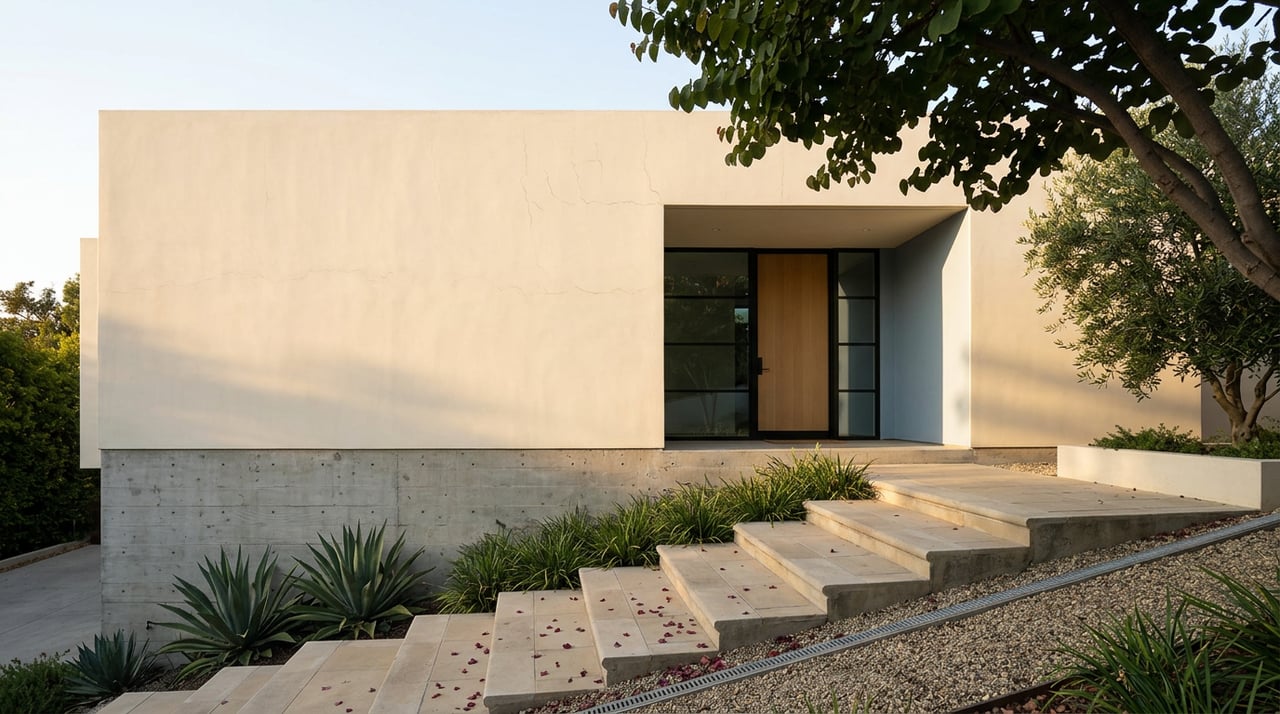
- Original material choices such as wood siding, exposed steel, and board-formed concrete.
Where Modernism Lives Today: Silver Lake's Architecture-Rich Streets
Certain streets in Silver Lake hold a higher concentration of significant homes than the neighborhood average, and buyers who care about design history gravitate toward them first. Micheltorena Street alone carries work from Schindler, Lautner, and Harris within a short walk of each other.
Silver Ridge Avenue and Neutra Place, the latter renamed from Argent Place in 1992 for Neutra's cluster of residences there, are equally significant. These pockets sit close to the Silver Lake Reservoir, which shaped the original siting of many homes and still anchors the neighborhood today.
Notable Pockets We Point Clients Toward
- Micheltorena Street, home to some of Silver Lake's most documented modernist residences.
- Silver Ridge Avenue, with a dense run of Schindler-influenced homes from the 1920s and 1930s.
- Neutra Place, a small enclave built around Richard Neutra's residential vision.
- The blocks surrounding the Silver Lake Reservoir, where lot lines still reflect early twentieth-century planning.
Living Among the Landmarks: Silver Lake's Lifestyle Today
Owning one of these homes means living in a neighborhood that has kept its character while continuing to evolve. The Silver Lake Reservoir's walking loop draws residents daily, and the streets around Sunset Junction hold a working mix of coffee shops, restaurants, and independent retail that grew up around the same hillside blocks these architects once built on. A walk for coffee here can just as easily pass a Schindler or a Neutra.
What Daily Life Looks Like Here
- Morning routines built around the Silver Lake Reservoir's walking path.
- Coffee and casual dining concentrated around Sunset Junction and Silver Lake Boulevard.
- Independent shops and restaurants within walking distance of many hillside blocks.
- Easy proximity to Griffith Park and the greater Los Feliz area for additional outdoor space.
Frequently Asked Questions
What makes Silver Lake's architecture different from other Los Angeles neighborhoods?
Silver Lake's hillside topography attracted architects who designed around difficult terrain rather than flattening it, producing site-specific modernist work that is harder to find in flatter, more uniform neighborhoods.
Are architecturally significant homes in Silver Lake hard to find on the market?
They come up less often than standard resale homes and tend to move quickly. We track these listings closely and reach out directly to owners of significant properties when a client is looking.
Can a mid-century home in Silver Lake be renovated without losing its value?
Yes, with care. Additions that respect the original massing, materials, and site relationship tend to protect a home's value, while changes that ignore the architect's intent can work against it.
Is Silver Lake still a strong market for buyers interested in design-forward homes?
It is. Demand has stayed consistent because supply is genuinely limited and the neighborhood's history keeps drawing buyers who want that combination of design and setting.
Do I need an agent who specializes in architectural homes to buy in Silver Lake?
It helps considerably. Knowing which renovations preserve a home's integrity, which comparable sales apply, and which streets carry the most architectural weight takes market-specific knowledge.
Find Your Place in Silver Lake's Architectural Story
Silver Lake's homes tell a longer story than most listings capture, and that story matters whether you are putting down roots or positioning a property for sale. A Schindler-era hillside home, a Neutra Place residence, or a well-preserved property along Micheltorena Street all call for the same thing: neighborhood knowledge deep enough to help you move with confidence. Get to know the team at
Trevino Properties, and let's talk about what Silver Lake's architecture can mean for your next move.